Old House Plumbing in Newmarket
Timber homes on stumps set the pattern for old house plumbing in Newmarket: pipe runs you can walk beneath, fittings installed by other eras, and gas lines that predate the units behind them. Houses from before the war and the post-war decades carry the supply, drain and gas runs under the floor rather than inside it.
If we're late, $100 comes off your bill

- Licensed and InsuredEvery job done by a licensed plumber. QBCC No: 15024607
- Fixed Quote FirstFlat-rate pricing, agreed before any work starts
- Lifetime Labour WarrantyBacked by our Fix-It-or-It's-Free guarantee (T&Cs apply)
- $0 Call-Out FeesNo extra charge for nights, weekends or public holidays

Local Newmarket Plumbing works on these homes across Newmarket and the suburbs around it, and every job is done by a licensed plumber. Old pipework asks different questions from new. The sections below cover what to look at, how galvanised steel fails, what a renovation triggers on paper, and who may touch old gas lines.
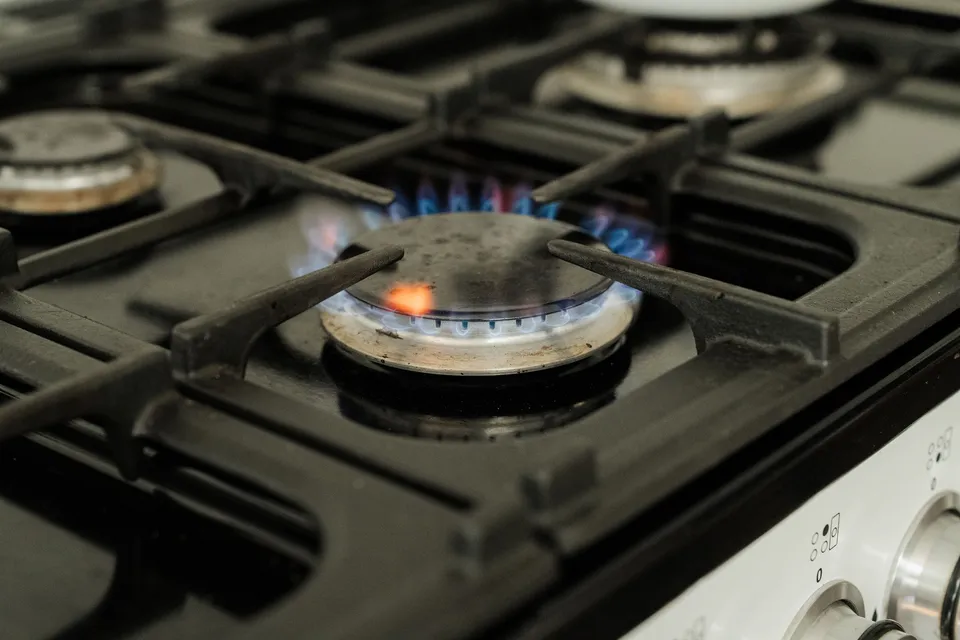
Signs of Trouble in Old Pipework You Can See
In a stumped house the water, drain and gas pipework runs through the open subfloor, where a torch shows every line from below. A slab build hides the same plumbing in the slab or behind wall linings, so reaching a fault means opening up.
Without pulling anything apart, an older house gives warning through:
- wet or soft soil beneath a pipe run
- drips or weeping at joints
- rust staining on pipes and fittings
- damp or stained timber near a line
- a musty smell under the house
A rusted supply fitting can drip unseen within a wall for days, and swelling skirting is usually the first sign. Raised floors make most of the checking easy; the wall cavities are where a plumber earns the fee.
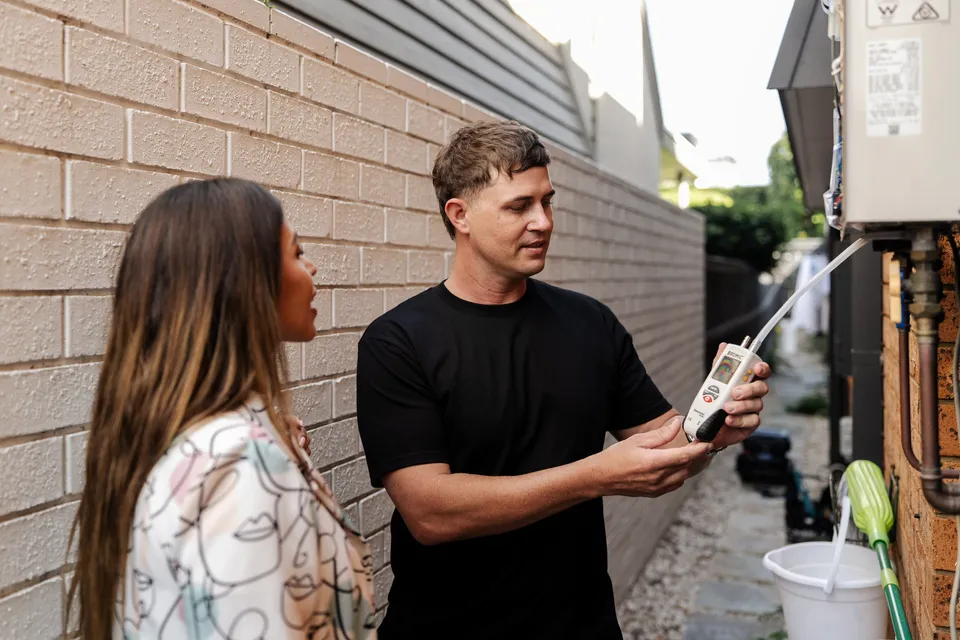
Rusty Water and Weak Flow in an Old House
Galvanised pipe is steel dressed in zinc, and when the zinc layer thins out, the steel corrodes from within. The failure shows up at the fixtures, not the pipe itself:
- brown or rusty water from the taps
- flow that weakens at several outlets together
- leaks that come back along one run no matter how often they're patched
Lead-based solder was common on Australian plumbing until 1989, so the joints in a house plumbed before then deserve a proper look. A plumber confirms what the pipes are made of and what shape they're in on site before recommending anything.
Renewing the supply line from the street is water pipe repairs territory, and that page walks through the job. A patch on corroded steel only buys time.

Which Renovations Count as Notifiable Work
Renovation plumbing in an existing home is nearly all notifiable work: a licensed plumber carries it out with no council permit and lodges a Form 4 with the QBCC. The owner gets a copy, and the form goes in within 10 business days. Under the Regulation, a house with both a water supply and drainage is an existing building, so any older home with live connections qualifies.
Some triggers shift the category or add a step:
Shared drains
Adding a fixture where several lots share one drain, or where the property has a dual reticulated water supply, is permit work, so the plumber applies to the local government first.
Temperature control
Queensland's rules require a temperature control device whenever a water heater is new or being replaced, keeping tap water no hotter than 50°C. Adding a fixture meant for personal washing, like a new shower, triggers the same device; swapping a tap washer or a shower head does not.
Asbestos
Most houses built before 1990 hold some asbestos in their fabric, so a reno on one takes extra precautions and may cost more.
A permit stays with the premises it covers, binding the current owner, whoever buys next, and any occupier. The QBCC also lets owners search notifiable work by address and ask for the Form 4 from a past job.
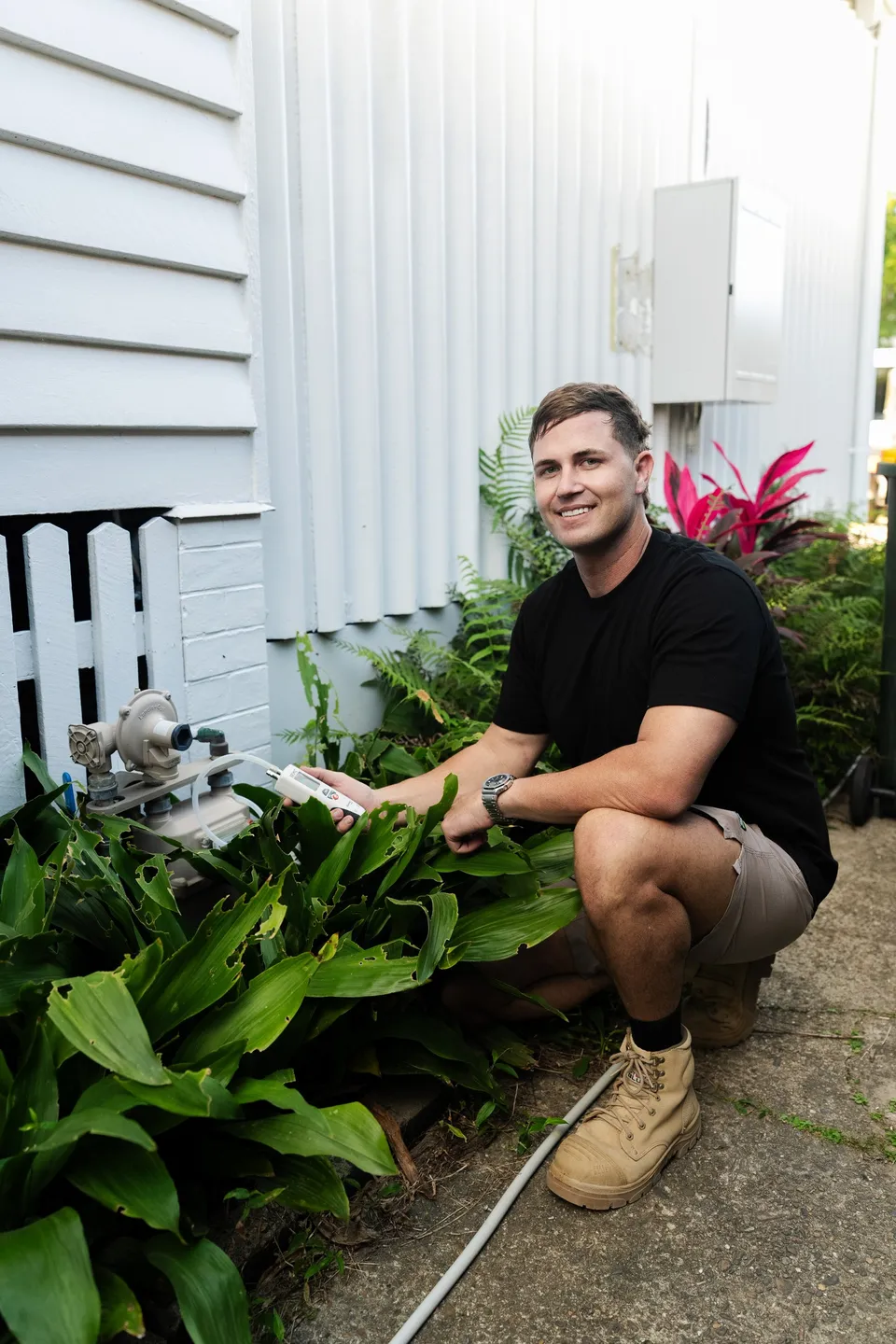
Corrosion and Wear in Older Gas Pipework
Queensland law reserves every gas task, from installing pipework to testing connections, for licensed gasfitters alone. The Queensland Government advises owners to check their gas systems often for corrosion, wear and damage, and to keep flammable materials away from appliances.
A gas worker who finds a safety fault mid-job and cannot fix it on the spot gives the owner a defect notice describing the problem.
Smell gas? Switch the appliance off, air the room, and touch no electrical switches. Shut the gas at the cylinder or meter if the odour stays, and dial 000 if it persists.
The paperwork for finished gas work is gas compliance certificates territory.
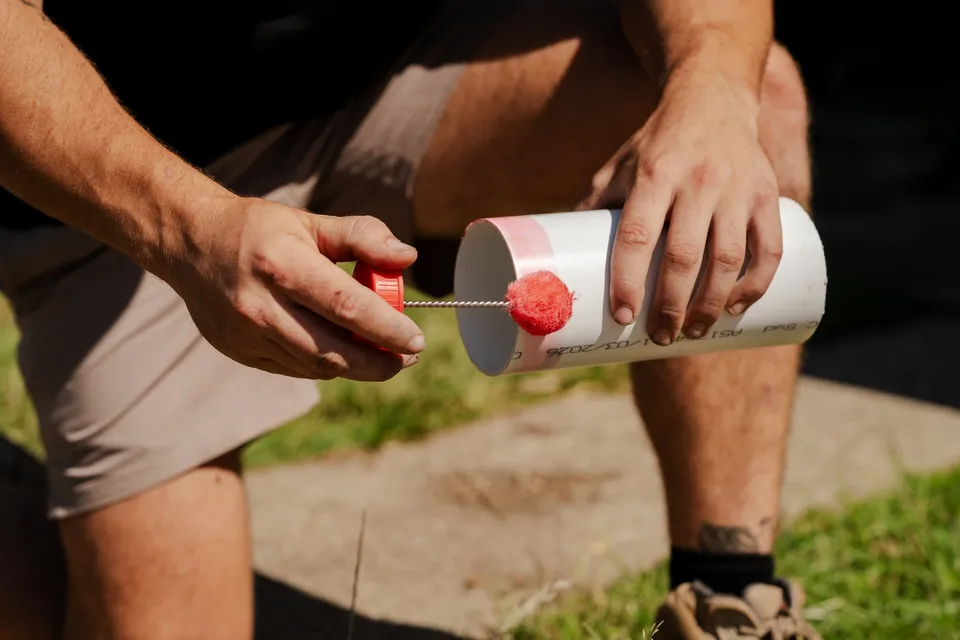
What Older Timber Homes Do to Pipes
Dry winters pull moisture out of the ground, and old earthenware joints can shift as the soil moves. A weep that returns each year in the same spot usually has soil movement behind it, not a bad washer.
The Queenslanders off Wilston Road sit on the same shale and alluvial soils as the rest of the suburb, so nobody's exempt. For faults the eye can't reach, leak detection traces the escape without ripping up floors.
How We Approach an Older House
- 1

Get in touch
Call (07) 3524 0766 or send a quick message about the job in Newmarket, and we'll ask what we need to know.
- 2

We inspect under the floor
We go under the house with a torch, identify each pipe material, check the joints and the gas line, and note what the years have done before quoting a fix.
- 3
Sign off the quote
You'll see a fixed quote before any work starts, with flat-rate pricing and no hidden fees. The job starts when you're happy with it.
- 4

Pay once it's done
Pay by card or EFTPOS on site after the work's finished, or choose Fix now, pay later.
Plumbing job in Newmarket?
$0 call-out fees, available 24/7, and same-day where we can.
Older House Plumbing Questions Answered
Call (07) 3524 0766Where do the pipes run in a timber house on stumps?
Under the floor, mostly. A stumped house carries its supply, drain and gas lines through the subfloor, where you can see the runs from below with a torch. A slab house hides much of it in or under the slab and inside wall cavities, so repairs mean opening floors or walls.
How do I check the plumbing in an old house?
Start with what shows: damp patches, wet soil, rust staining, drips at joints, brown water, weak flow and a stale, damp smell beneath the boards. Bring in a licensed plumber for the rest, and our leak detection page explains the meter test that finds hidden leaks.
Are there galvanised water pipes in Newmarket homes?
Yes, some older houses may still hold galvanised steel in their supply runs, though a plumber identifies the material on site before advising anything. Rusty water and flow that drops at several outlets together point that way, and the fix is replacement, not patching.
Is old gas pipework in a Newmarket home safe?
No, safety comes down to condition, and a licensed gasfitter is the only person qualified to judge old gas lines; the Queensland Government advises checking often for corrosion and wear. Smell gas? Kill the appliance, open the doors and windows, and leave every switch alone, close the supply at the meter or cylinder if the smell stays, then call 000.
Can I find out what plumbing work was done before?
Yes, the QBCC keeps a register of notifiable work searchable by address, and an owner can ask for a copy of the Form 4 for work at the property. Any permit from past work attaches to the premises, so it binds the owner, a later owner in title, and any occupier.

Call Us About an Older HouseWe'll call you back.
Book on (07) 3524 0766 for plumbing anywhere in Newmarket. We're available 24/7, there's no extra charge for nights, weekends or public holidays, and every job comes with $0 call-out fees.
To claim your $0 call-out fee, call (07) 3524 0766 today.